

Launching a commercial building project—whether it is a ground-up retail center, a specialized medical clinic, an industrial warehouse, or an interior corporate office build-out—is one of the largest capital investments a business owner or organization can make. The contractor you choose will directly shape your construction timeline, final budget, structural build quality, and daily stress level from early pre-construction planning through final municipal inspection. With so much money and operational momentum at stake, rushing the selection process or simply accepting the lowest bid on paper can lead to costly change orders, missed grand-opening dates, and frustrating communication breakdowns.
Taking a structured, thorough approach to vetting prospective builders will help you partner with a reliable commercial construction company that genuinely aligns with your vision, budget, and long-term operational goals.
Evaluating Relevant Experience and Past Projects
Not all builders specialize in the same types of structures, and commercial construction carries vastly different regulatory, structural, and engineering demands than residential homebuilding. Before reviewing formal proposals, look closely at each candidate’s portfolio to confirm they have successfully delivered projects similar in square footage, technical complexity, and industry sector to yours.
Building a sterile healthcare facility, a high-load manufacturing warehouse, or a busy commercial restaurant requires specialized mechanical systems, heavy-duty utilities, and strict compliance with local zoning, fire, and accessibility codes. Ask prospective builders to share detailed case studies, photo galleries, and project schedules from comparable builds completed within the last three to five years. A seasoned commercial construction company with proven experience in your specific sector will anticipate common regulatory bottlenecks early, recommend practical value-engineering alternatives to save money, and navigate municipal permitting far more efficiently than a generalist learning on your dime.
Verifying Licensing, Insurance, and Safety Records
Before any contractor steps foot on your property, you must confirm that their legal, financial, and safety credentials are completely current and properly documented. Start by verifying that the firm holds active state and municipal contractor licenses required for commercial work in your exact jurisdiction. Next, request current certificates of insurance showing comprehensive general liability coverage, workers’ compensation policies, and commercial auto insurance, along with surety bonding capacity appropriate for the total financial size of your build.
Equally important is examining the builder’s job site safety record. Ask for their Experience Modification Rate (EMR) and review their Occupational Safety and Health Administration (OSHA) compliance history over the past several years. An EMR below 1.0 indicates a stronger-than-average safety track record, reflecting consistent job site training, strict hazard prevention protocols, and attentive field supervision. Safe, well-managed job sites protect workers from serious injury while shielding your business from costly project shutdowns, regulatory fines, legal disputes, and third-party liability claims.
Reviewing Communication Style and Project Management
Even the most technically skilled builders can derail a project if communication breaks down between the field crew, the architectural design team, and the property owner. During your initial interviews, pay close attention to how clearly, thoroughly, and promptly each firm responds to your questions, and ask specifically who will manage your project on a day-to-day basis.
Find out whether you will have a dedicated project manager and a full-time on-site superintendent assigned continuously from pre-construction through final punch-list completion. Ask how frequently they conduct formal progress meetings, what cloud-based project management software they use to track daily logs, schedules, and budget updates, and how they document and price unexpected field conditions or design revisions. Clear, transparent reporting ensures you never have to guess where your capital is going or whether critical construction milestones are slipping behind schedule.
Comparing Transparent Bids and Subcontractor Networks
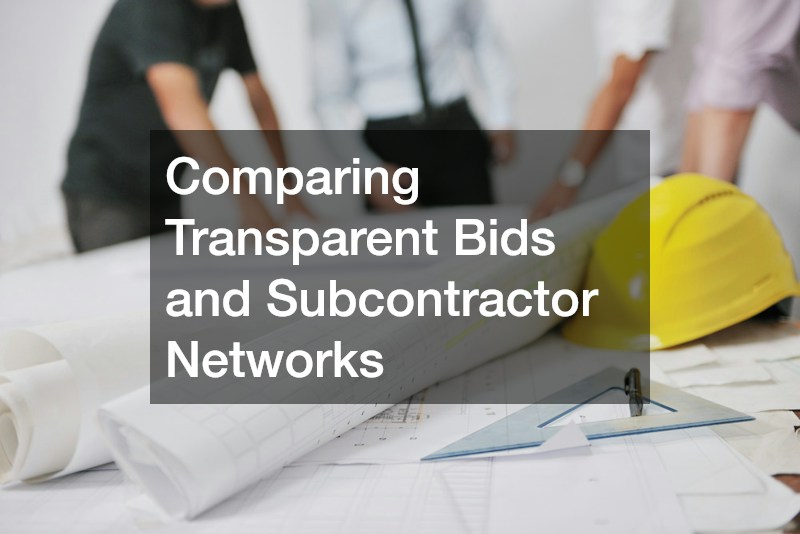
When comparing estimates from multiple builders, resist the urge to focus exclusively on the bottom-line dollar figure. A suspiciously low bid often leaves out essential site preparation costs, realistic material allowances, utility connection fees, or adequate contingencies—setting the stage for expensive change orders once excavation or framing is underway. Instead, require detailed, itemized proposals broken down by division so you can compare labor, materials, general conditions, and contractor fees apples to apples.
It is also smart to ask about the strength and stability of each builder’s local subcontractor network. General contractors rely heavily on trusted electricians, plumbers, HVAC technicians, steel fabricators, and concrete specialists to execute the physical work. A reputable commercial construction company maintains long-standing, respectful relationships with reliable, vetted trade partners, which translates directly into superior craftsmanship, competitive material pricing, and dependable scheduling even when regional construction labor markets are tight.
Checking Client References and Financial Stability
Finally, take the time to speak directly with past clients and design professionals who have worked alongside your top contenders. Ask previous property owners whether the builder stayed close to the original budget, how smoothly they resolved unforeseen site challenges, how clean and organized they kept the active job site, and how responsive they remained after project closeout when warranty items arose.
You can also ask architects, civil engineers, or structural engineers who collaborated with the firm about their professionalism, problem-solving mindset, and attention to blueprint details. Combined with a quick verification of the contractor’s financial stability and supplier credit standing, thorough reference calls give you the confidence that your chosen builder has the resources, integrity, and leadership to see your project through to a successful ribbon-cutting.